
Why training and adoption matter as much as good design — and what you can do about it
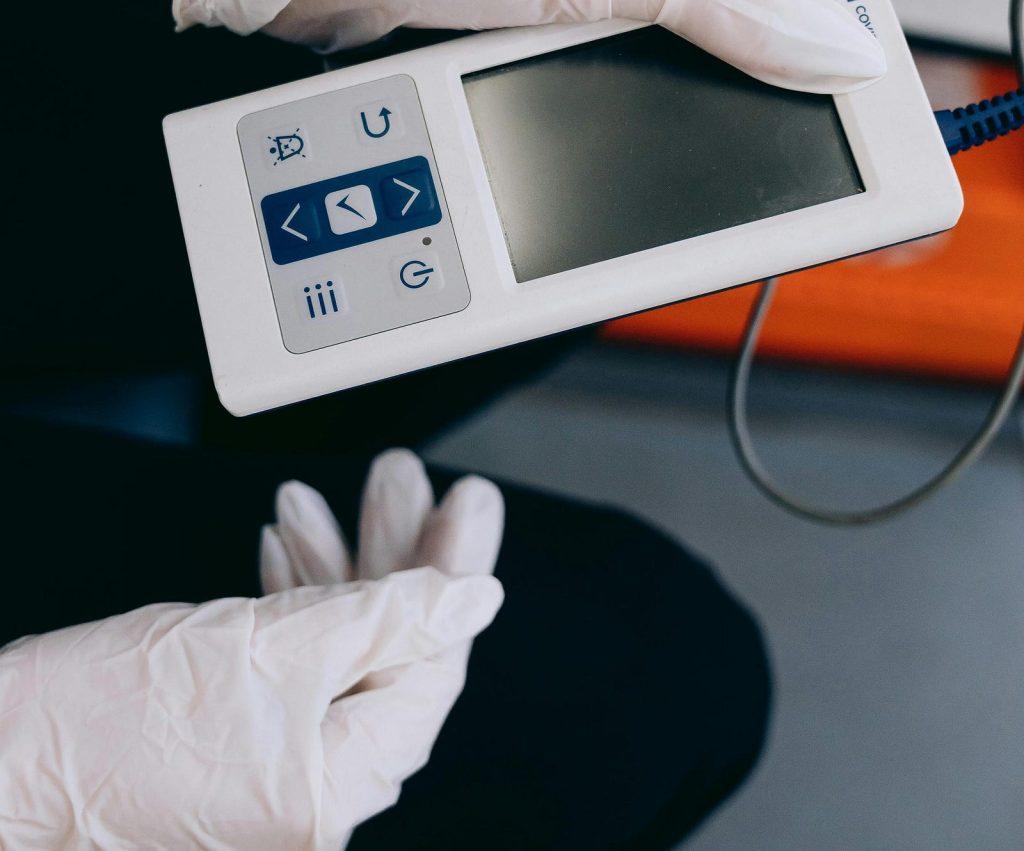
You can design the most innovative medical device in your category, invest millions in development, and bring a fully cleared product to market. But if clinicians don’t use it correctly in real-world conditions, the value of that innovation is never fully realized.
The problem is this: a breakdown between innovation, adoption, outcomes, and revenue.
And that breakdown explains why medical devices aren’t used as designed — even when the device itself is well-engineered. No wonder, then, the gap between innovation and outcomes becomes a direct financial loss.
I’ve seen this firsthand, over and over again. As a nurse, I can read a procedure, attend the training, sign a form, and move on in under a minute. That’s compliance. But when I’m managing high-acuity patients with limited staffing, I’m not experimenting with unfamiliar features. I’m doing what I know works.
And if your device doesn’t feel intuitive and usable in that moment, I will quietly work around it.
The real problem isn’t knowledge — it’s performance
Most organizations respond by adding more information.
- More training.
- More explanation.
- More emphasis on the “why.”
But this is exactly why medical devices aren’t used as designed.
Medical devices don’t fail because clinicians don’t understand or value them. They fail because clinicians cannot consistently execute under real conditions.
Davis (Technology Acceptance Model) demonstrated that adoption depends on perceived ease of use and perceived usefulness. If a device doesn’t feel usable in practice, it will not be used consistently — no matter how well it was introduced.
Issenberg et al. showed that hands-on practice with feedback, especially in realistic scenarios, produces significantly better performance than passive methods like reading or watching. Exposure does not equal competence.
And this is where educational design either works — or falls apart. For example, incorporating key points into the training: When they’re deliberately structured, reinforced, and practiced, they hold under pressure. When they aren’t, they disappear the moment real-world demands take over.
Carayon et al. found that when tools and processes do not align with clinical workflow, users create workarounds or avoid the system altogether — even when the technology itself is sound.
I’ve seen that on my own unit many times. And now my clients report the same pattern in their organizations. That’s not just anecdotal — it’s consistent with the research.
And if you need one more signal, The Joint Commission continues to identify training gaps, communication breakdowns, and system issues as contributors to errors — reinforcing that exposure alone does not ensure correct use in practice. Don’t hesitate to use TJC’s root cause framework.
When both research evidence and real-world experience are telling us the same thing, we’d better listen!
Why medical devices aren’t used as designed in real clinical environments
The expectation is straightforward: clinicians will adopt the device and use its features as intended.
In reality, that’s not what happens.
What looks intuitive in a design meeting often doesn’t translate to the bedside. Clinical environments are unpredictable, fast-paced, and cognitively overloaded. When something isn’t immediately clear — or feels even slightly risky to get wrong — clinicians don’t pause to figure it out. Instead, here’s what happens.
They move on. They skip the feature. They default to an older method. They use only the parts of the device they feel confident with.
Have you or your sales reps already seen this? A nurse is introduced to a new device with advanced settings designed to improve outcomes. Sure, during training, those features were explained. But on a busy shift with two unstable patients, she uses the default setting she recognizes and ignores the rest.
Not because she wasn’t trained. Because she wasn’t prepared to use it under pressure.
The “read and sign” reality
From an organizational standpoint, training often looks complete.
- Procedures are written.
- Videos are shared.
- In-services are offered.
- Attendance is documented.
- And yes — forms are signed.
As a staff nurse, reading and signing was easy for me. I could quickly comply with the procedure. (Shoot! As the clinical nurse specialist for the unit, I might even write the procedure!) That doesn’t mean I can actually use the device the way the engineers designed it — especially when it comes to decision-making, fine-tuning, or what Ruth Colvin Clark calls “adjusting controls.”
And that’s the part that gets missed.
Using a device isn’t just about turning it on. It’s about moving beyond the default setting and making real-time clinical decisions.
Otherwise, the default wins. Knowing the feature exists is not the same as being able to use it when it matters. It’s like a back-up camera. You don’t have to use it — you can still turn around and look. It’s not as effective, but it works. You want to enable your clinicians to do what’s best, not what works because it’s what they’ve always done.
You want precision. You want outcomes.
The missing link: instructional design that actually drives performance
If this is why medical devices aren’t used as designed, then the solution isn’t “more training.”
It’s better design. Not content design. Instructional design. The kind that:
- builds performance, not just awareness
- requires practice in realistic conditions
- reinforces key decisions — not just steps
- validates competence before expecting real-world use
Because without that, you are relying on hope. And hope is not a strategy for adoption, utilization, or revenue.
Where revenue is actually gained — or lost
If you want to understand why medical devices aren’t used as designed, follow the revenue.
Revenue is sustained when:
- contracts are renewed
- clinicians trust and rely on the device
- clinicians advocate for it internally
- outcomes match what was promised
When that doesn’t happen:
- features go unused
- utilization drops
- outcomes disappoint
- adoption stalls
If clinicians aren’t using your current model as designed, they won’t be excited about adopting your next model. Instead, they might be downright reluctant.
Final Thoughts
If you’re trying to understand why medical devices aren’t used as designed, look at what happens after training. Ask yourself, what happens when clinicians are under pressure and making real-time decisions?
That’s where adoption either happens or fails.
And that’s what determines whether your device delivers, whether contracts are renewed, and whether clinicians become advocates or quietly move on.
If you’re seeing this gap, it may be time to take a closer look at how your education is designed — not just delivered.
Because if your medical devices aren’t used as designed, the value of your innovation — and the revenue tied to it — will remain unrealized.